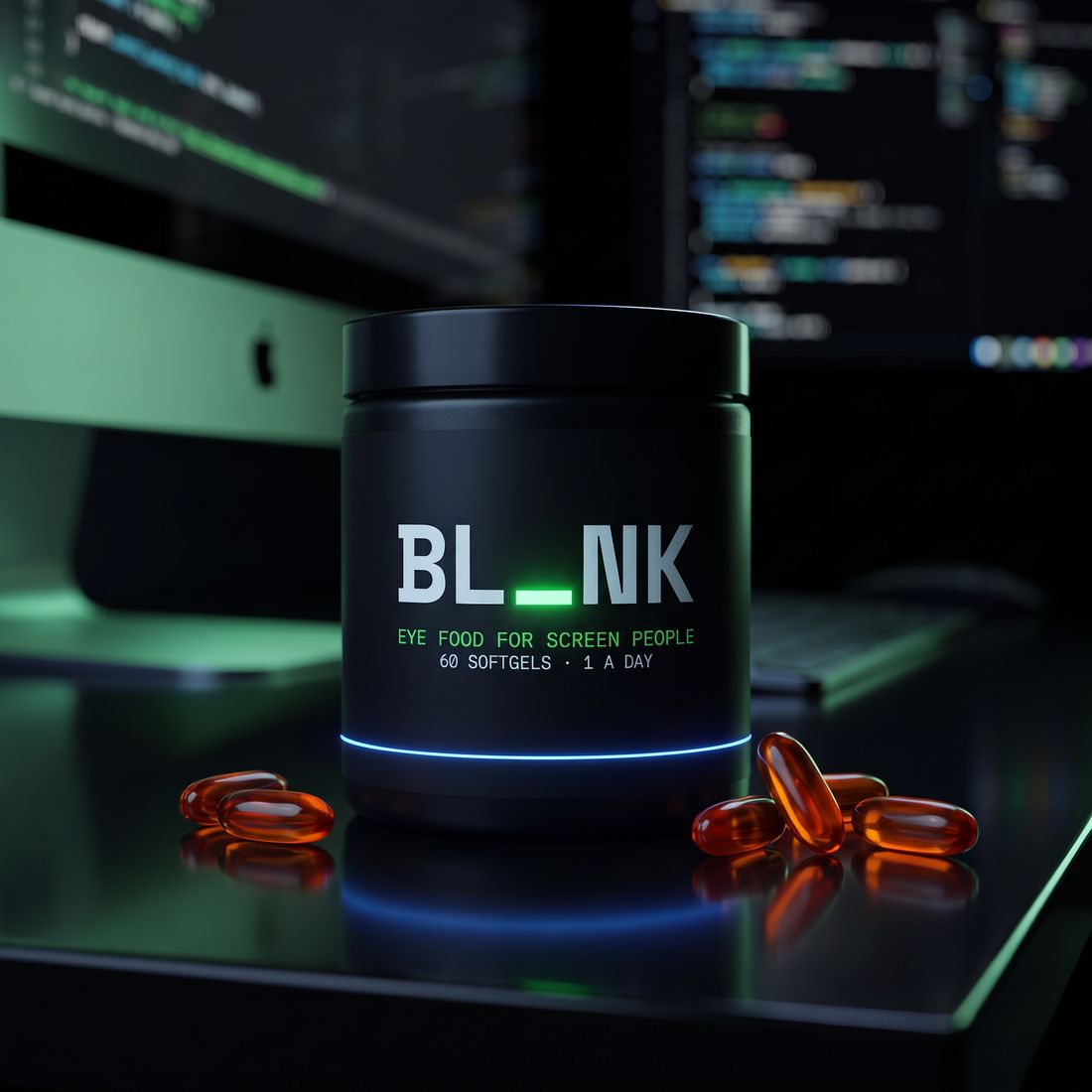
 60 softgels · 1 a day
// eye food for screen people
Your eyes clock off at 6pm.
You're not going to log off, and we're not going to tell you to. BL_NK is one softgel a day with the nutrients your eyes run on, made for people whose job is a screen.
- Lutein, zeaxanthin and astaxanthin, plus algal omega-3
- Vitamins A and B2, which contribute to normal vision
- One small softgel a day · 60 days per tub · vegan
// the numbers
Screens aren't going anywhere. Neither are you.
1 Moore, Wolffsohn & Sheppard, Contact Lens & Anterior Eye, 2024. 2 Ohio State University optometry study, Optometry & Vision Science.
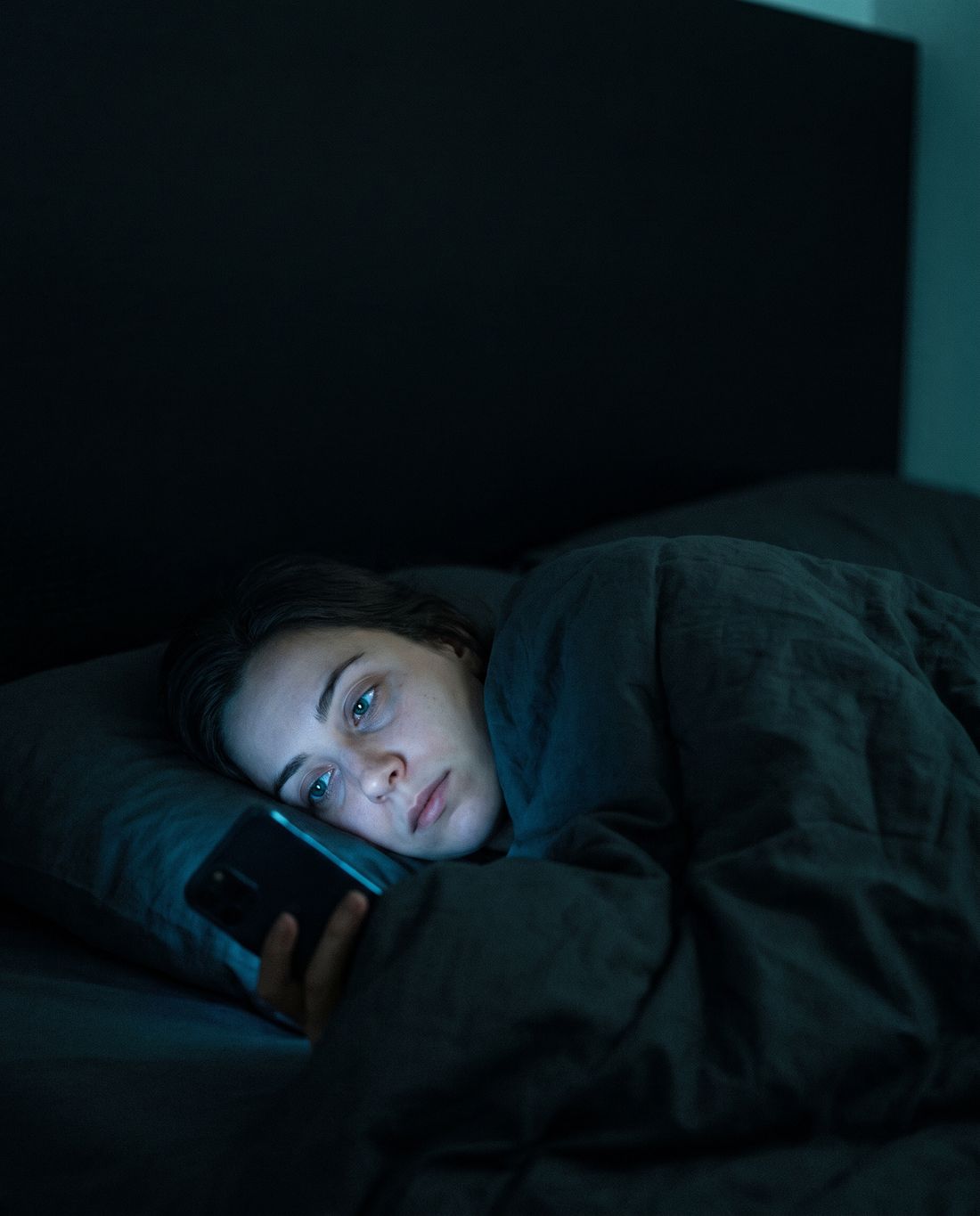
// blink_rate.log
You blink less when you scroll.
Relaxed, you blink around 15 times a minute. Lock onto a screen and squint a little, and that can halve. Fewer blinks means drier, heavier eyes by the evening, and most of us go straight from the laptop to the phone.
// what_screens_actually_do.md
What screens do to your eyes. And what they don't.
There's a lot of scary stuff online about screens. Here's what the evidence says, including the bits that don't help us sell supplements.
Tired, sore, dry eyes, blurry focus and headaches after long screen sessions. 62.6% of UK and Irish working adults report symptoms.1
You blink less when you concentrate on a screen, so the tear film breaks up and eyes feel gritty by the evening.2
In children and teens, high screen time is linked with roughly double the odds of myopia, with computers showing the strongest link.7
Screens late at night can keep your brain switched on and push back sleep, which leaves eyes more tired the next day.8
UK optometrists say there's insufficient evidence that blue light from devices contributes to age-related macular degeneration (AMD). Sunlight carries far more.8
Lutein and zeaxanthin form the pigment that filters blue light inside the eye. The NIH's AREDS2 study used 10mg lutein and 2mg zeaxanthin, the doses in BL_NK, in people with AMD.4 We don't claim BL_NK prevents eye disease. We give your macula what it's made of.
// what's in one softgel
Six ingredients. Nothing to hide.
What each one does, and what the research actually says. Most eye supplements are made for ageing eyes and sit next to the reading glasses. BL_NK is made for working ones.
what it doesYour eye's built-in blue-light filter. Lutein collects in the macula as yellow pigment, which soaks up blue light and glare before it reaches the cells you see detail with.
the researchIn a 6-month trial of 18–25-year-olds on screens 6+ hours a day, lutein and zeaxanthin raised macular pigment, sped up glare recovery and cut reported eye strain, eye fatigue and headaches versus placebo.3 10mg is the dose used in the NIH's AREDS2 study.4
what it doesLutein's partner, packed into the very centre of the macula (the fovea), the spot you use to read this sentence.
the researchPart of the same macular-pigment trials above. 2mg matches the AREDS2 dose, paired 5:1 with lutein.4
what it doesThe red carotenoid from microalgae, and a powerful antioxidant. It's the one most studied for the focusing fatigue you get after hours at a monitor.
the researchIn a 6-week controlled trial of screen workers with tired eyes, a combination with astaxanthin and lutein slowed the drop in focusing ability after screen work and improved "trouble focusing" scores versus placebo.5
what it doesDHA is one of the main structural fats in the retina. Ours comes from microalgae, the original source fish get it from, so it's vegan with no fishy aftertaste.
the researchBeing straight with you: a large 2018 trial found fish-oil omega-3 didn't beat placebo for dry eye disease,6 so we don't claim it fixes dry eyes. It's here as a building block, not a cure.
what it doesContributes to the maintenance of normal vision. Your eyes use it to make rhodopsin, the pigment that lets you see in dim light.
the researchAn approved health claim in the UK. 400µg is 50% of your daily reference intake.
what it doesRiboflavin. Contributes to the maintenance of normal vision and to the reduction of tiredness and fatigue.
the researchBoth approved health claims in the UK. 0.3mg is about 21% of your daily reference intake.
Food supplement. Not a substitute for a varied diet, regular eye tests or screen breaks. If you have an eye condition, are pregnant or take medication, check with your optician or GP first.
// how_to
Takes four seconds. Works on your schedule.
Carotenoids are fat-soluble, so take your softgel with food. Coffee counts if there's milk in it.
Lutein builds up in the eye over weeks, not hours. Consistency beats dose.
One tub lasts 60 days. Give it the full tub before you decide.
// diff
What the alternatives don't do.
| Feature | BL_NK | Blue-light glasses | Eye drops | Pharmacy eye supplements |
|---|---|---|---|---|
| Feeds the eye from the inside | Yes | No | No | Yes |
| Made for screen workers | Yes | Yes | Partly | No, aimed at ageing eyes |
| Astaxanthin and algal omega-3 | Both, in one softgel | No | No | Rarely both |
| Vegan | Yes | n/a | Varies | Often fish oil or gelatin |
| Effort | One softgel a day | Wear them all day | Several times a day | Often 2–3 tablets a day |
// built_for
People whose job is a screen.
And whose evening is one too.
// faq
Questions
How long until I notice anything?
Carotenoids like lutein build up in the eye over weeks, which is why a tub lasts 60 days. Give it at least a full tub before you judge it.
Is it vegan?
Yes. The omega-3 comes from microalgae rather than fish oil, so there's no fishy aftertaste, and the softgel is plant-based.
Does it replace blue-light glasses, drops or breaks?
No. It works alongside them. Glasses and drops act on the surface; BL_NK supplies nutrients from the inside. Keep taking screen breaks and keep up with eye tests.
Can I take it with other supplements?
Usually, but check the vitamin A in anything else you take, and ask your GP or pharmacist if you're on medication or pregnant.
When can I order?
Our first batch is in independent testing now. Join the list for 20% off your first tub and first access.